UNILAB Radioactive Starter Kit
by Unilab
Product code: CP060194
£1,259.94 exc. VAT
Product code: CP060194
£1,259.94 exc. VAT
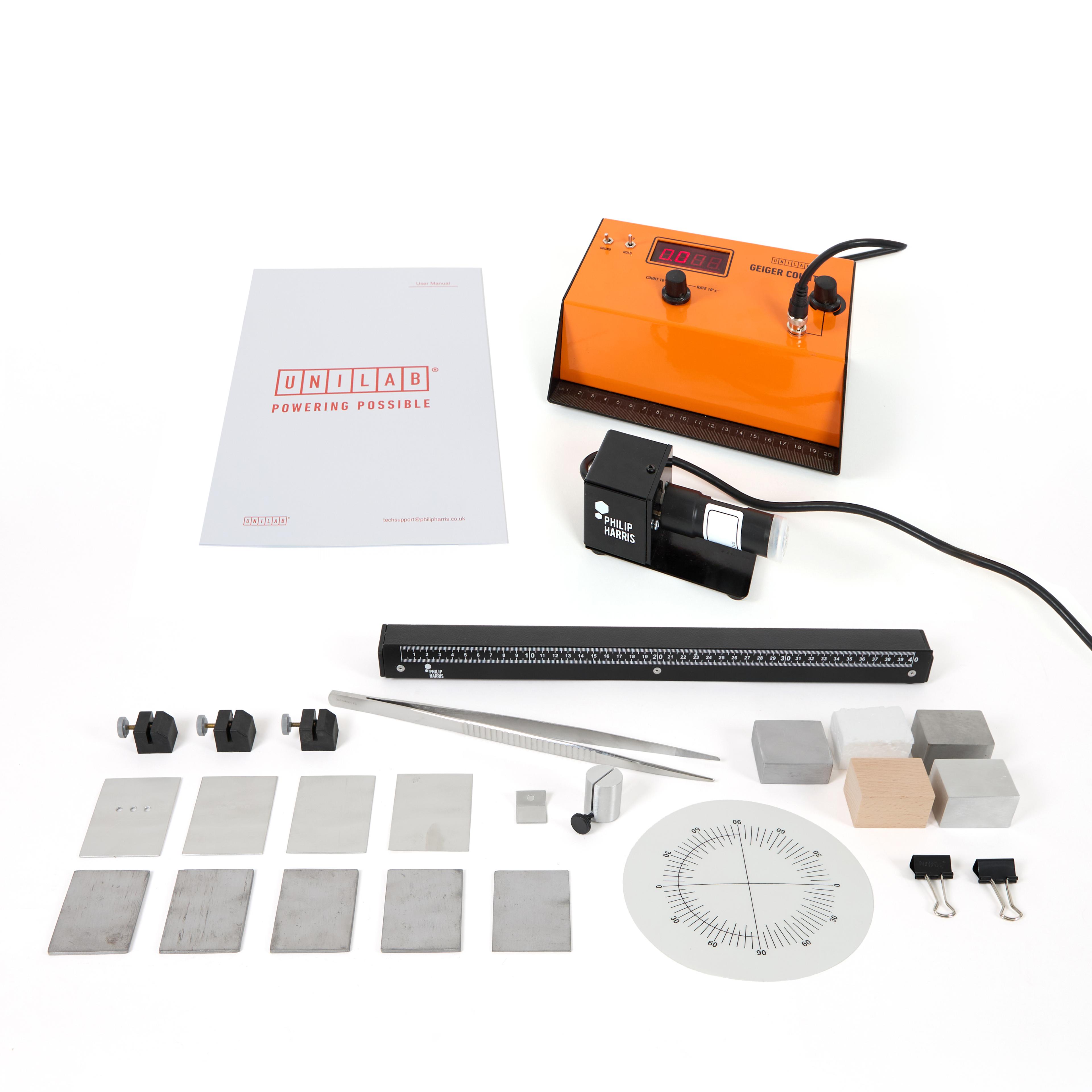
This Radioactive Starter Kit contains a multitude of items which a Science Department can use in order to conduct Radioactivity demonstrations in the classroom, and enables a comprehensive range of experimental investigations into the characteristics and properties of radioactive emission to be carried out.
- Please note: Radioactive Sources are not included, but are available to purchase separately (B8A49589, B8A49578, or B8A49591)
The kit includes the following:
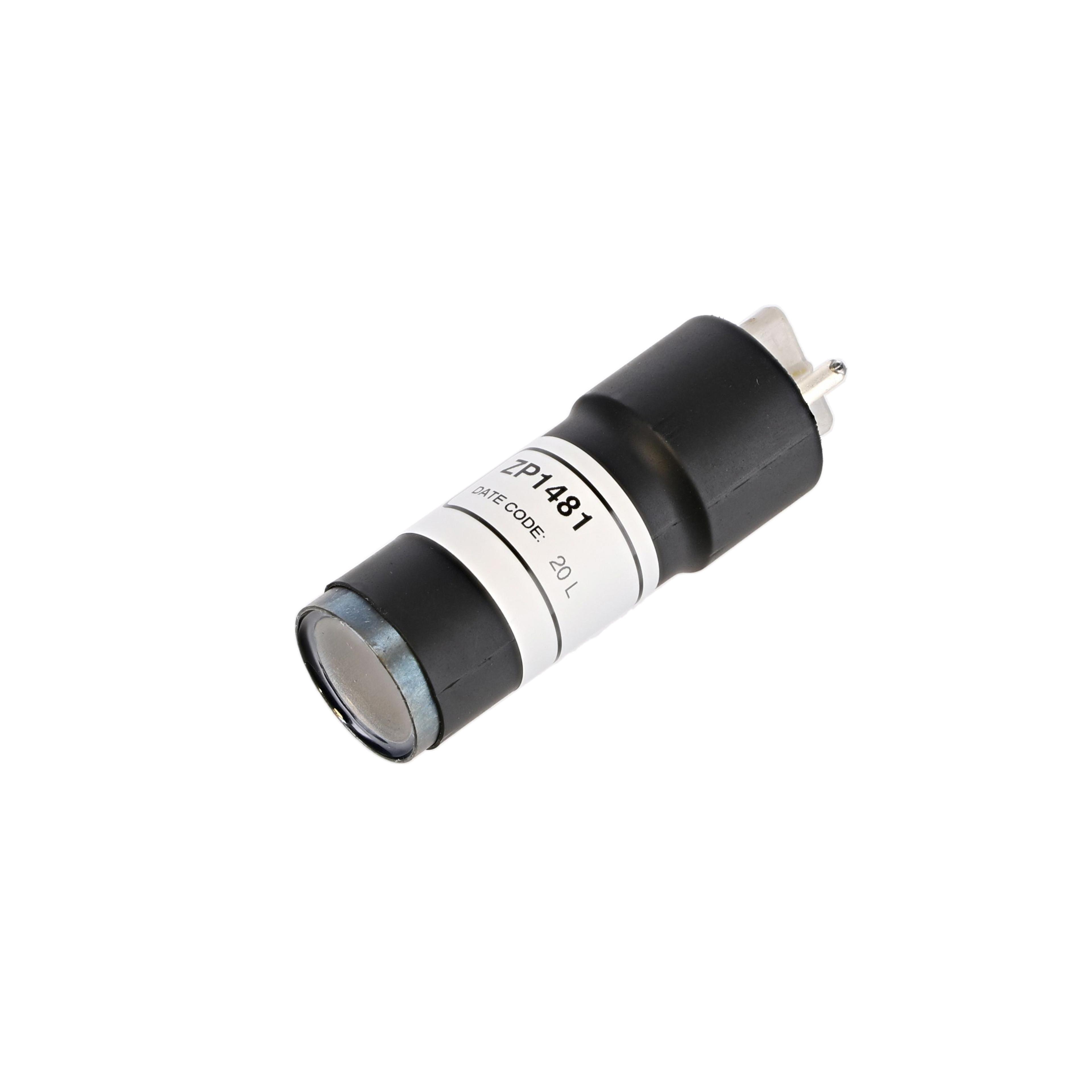
- Geiger-Muller Tube (B8A49724)
- Unilab Geiger Muller Counter (PP00059838)
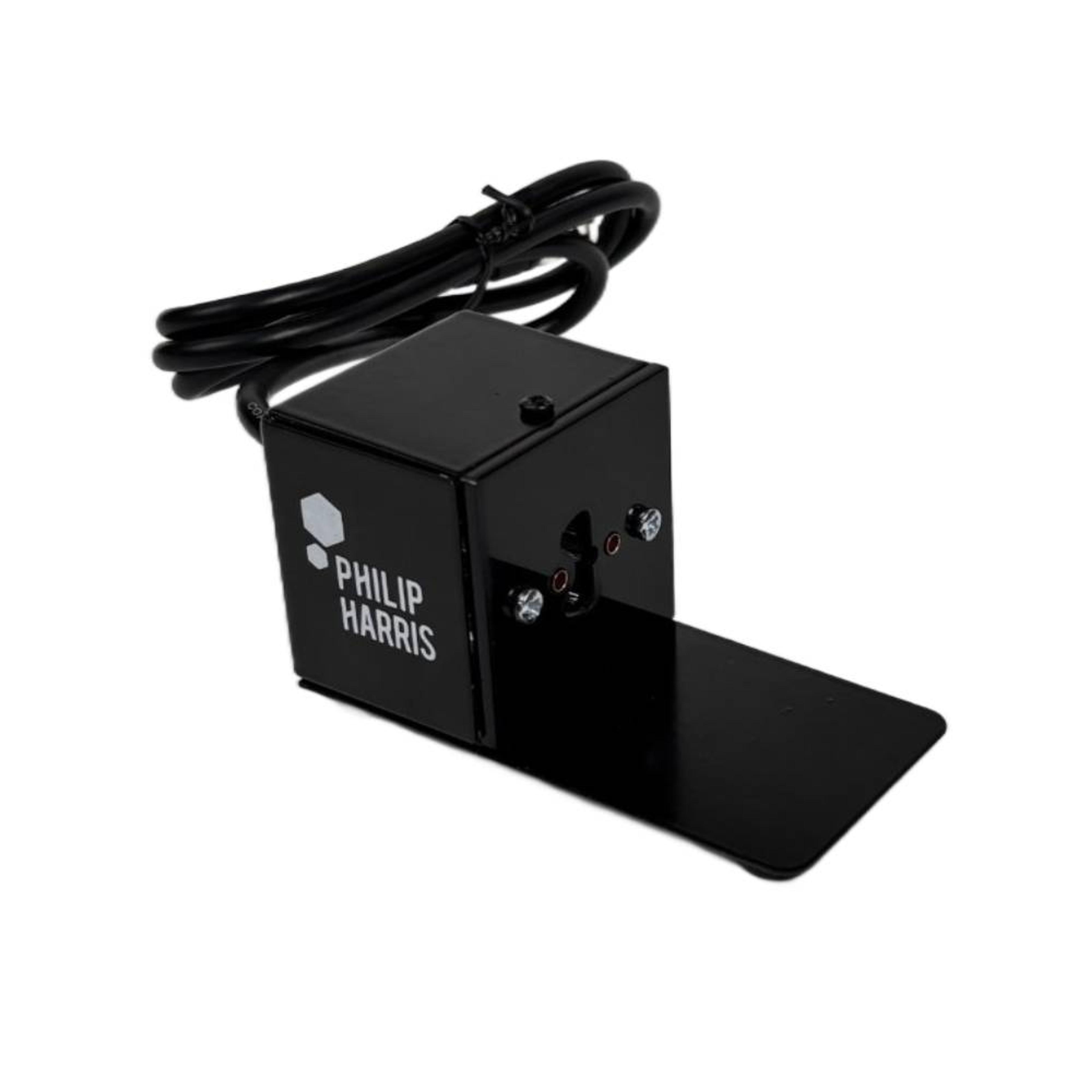
- Geiger-Muller Tube Holder (PP00057038)
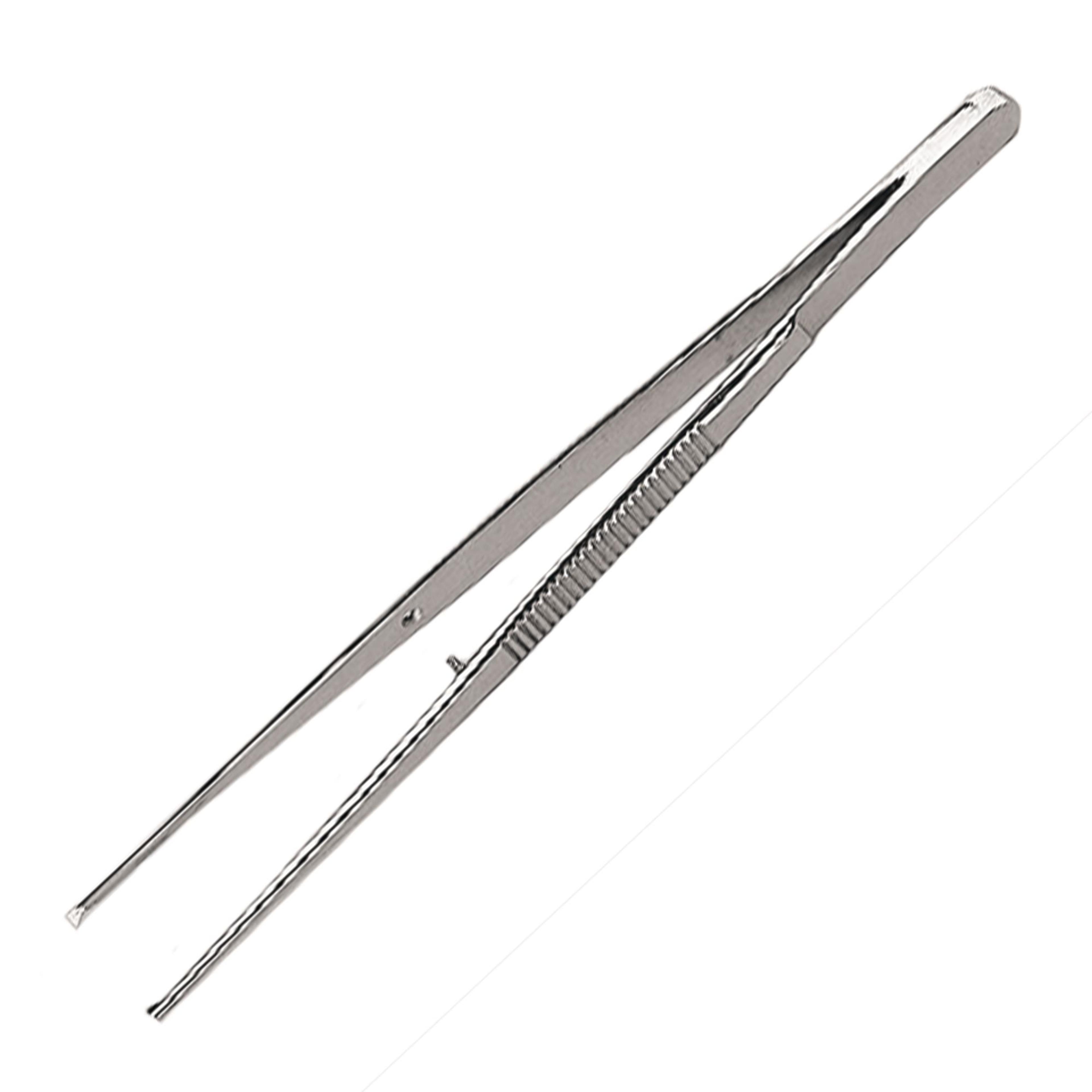
- Extra Long Forceps - 300mm (B8R00176)
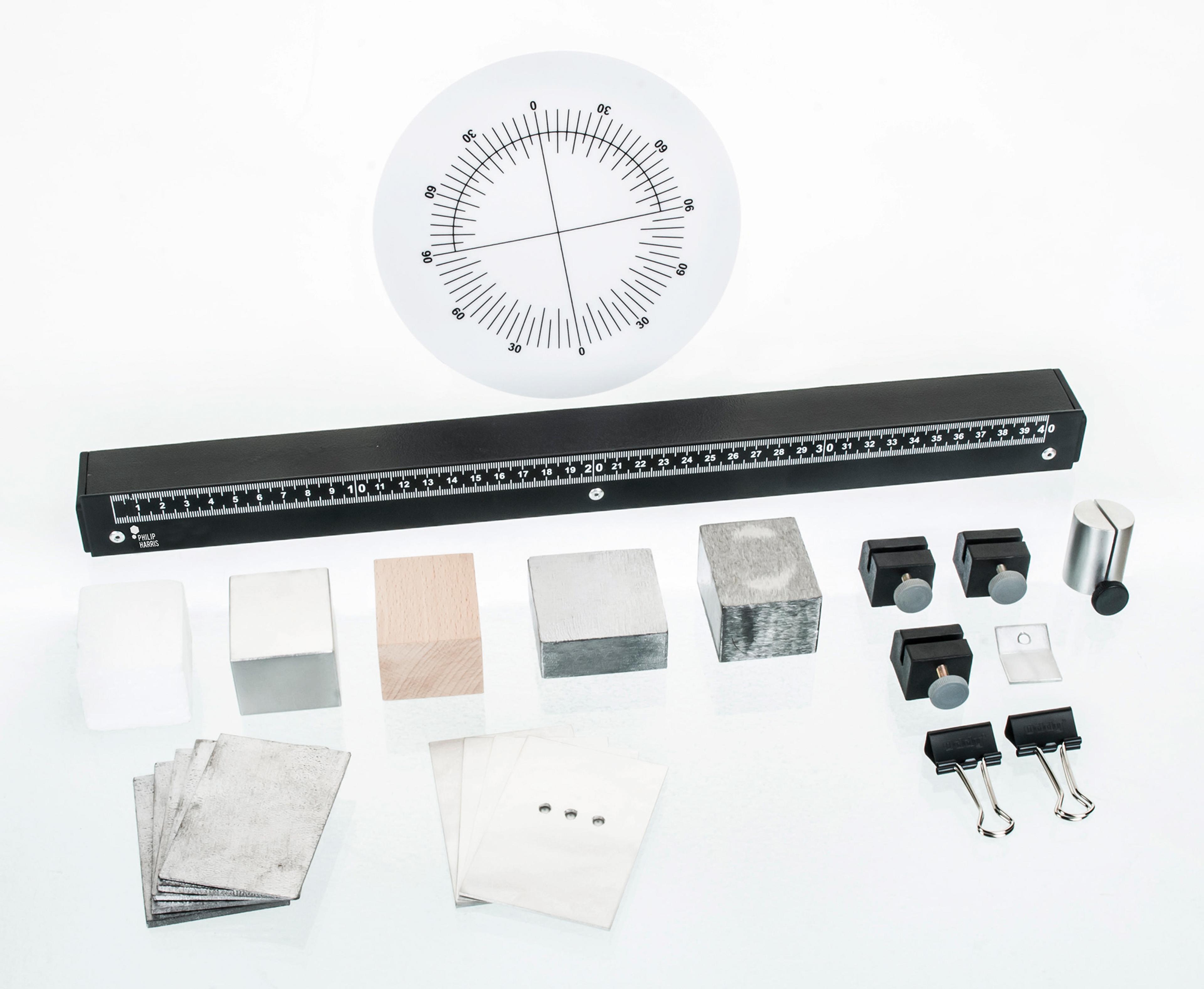
- Experimental Radioactivity Kit (B8H27143)
The Experimental Radioactivity Kit includes the following:
- Radioactivity bench
- Aluminium Absorbers
- Lead Absorbers
- Set of Solid Blocks (made of Polystyrene, Wood, Aluminium Lead)
- Source Holders x 2, with Bulldog Clips for holding a cup source
- Carriages for Source Holders and Absorber Plates
- Collimator
- Full teacher notes
The included Experimental Radioactivity Kit will enable students to investigate the following:
- To classify radioactive and non-radioactive solids.
- To investigate the randomness of the radiation emitted by a Radium226 source.
- To compare the activity of emitters.
- To reduce the intensity of radiation emitted by a source.
- To separate the radiation emitted by a Radium226 source.
- To investigate the rate of decay of a radioactive source and to determine the half-life of that decay process.
- To determine the range of alpha particles in the air.
- To investigate the absorption of beta particles in a metal.
- To investigate the attenuation of gamma rays in lead.
- To investigate the relationship between the intensity of gamma rays at a point and the distance of that point from the source.
- To monitor the distribution in space of the emission from a radiation source.
- To investigate the deflection of a stream of beta particles in a magnetic field.
- To investigate the back scattering of beta radiation by solids.
- To gauge the thickness of aluminium foil by the transmission of beta particles.
- To gauge the level of a liquid or powder by the transmission of beta particles.