

A Practical Guide to Creating Inclusive Classrooms in International Schools
Quick Answer
Creating inclusive classrooms in international schools involves understanding individual student needs, making practical teaching adaptations, implementing multisensory and communication resources, and adapting the physical and emotional environment to ensure every child can thrive and belong.
In this article
Every child deserves to feel that they belong in the classroom. Creating inclusive classrooms is a fundamental part of effective teaching and ensures every child has the opportunity to thrive.
For children with Special Educational Needs and Disabilities (SEND), thoughtfully adapted learning environments, supported by evidence-informed resources and approaches, can significantly improve engagement, independence and learning outcomes.
From the earliest stages of education and throughout primary school, inclusive practice plays an important role in recognising individual needs, removing barriers to learning and helping every child reach their potential.
A genuinely inclusive classroom recognises those differences from the start. It isn't about expecting every child to learn in the same way. It's about understanding what can get in the way of learning, and making practical, thoughtful changes that help every pupil participate, build confidence and make progress.
Supporting Communication and Language Development
Speech, language and communication needs are common throughout early years and primary education. Augmentative and Alternative Communication (AAC) tools, including symbol-based communication boards and simple voice devices, can enable children to express themselves and access learning alongside their peers.
As a practitioner, it is important to consider the individual needs of each child and plan appropriate adaptations so that every learner can participate meaningfully in activities and access learning. Creating regular opportunities for purposeful talk is equally important, particularly for children developing their vocabulary and those learning in a language that is additional to their home language. Providing different ways to communicate can help every child participate, express their ideas and build confidence.
Two children with the same identified need can experience the classroom very differently. Their strengths will be different. The barriers they encounter will be different. And the support that helps them succeed may be different too.
So, start by getting to know the child. When do they participate most confidently? What makes learning more difficult? How do they prefer to communicate? What helps them work independently? Are there particular environments, routines or situations they find challenging?
Understanding the difference matters. It helps schools provide the right support, at the right time, for the right reasons.
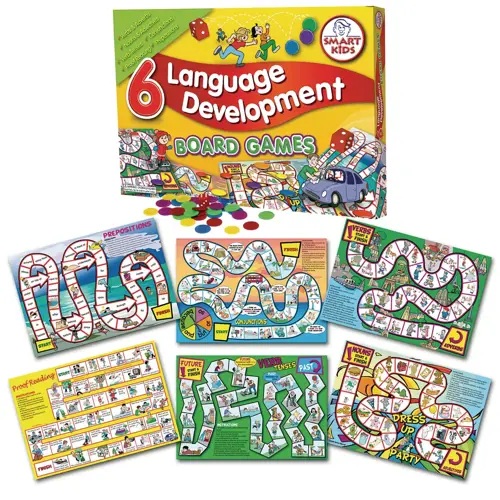
Supporting Literacy and Numeracy Through Multisensory Learning
As children progress through primary education, inclusive classrooms benefit from structured, multisensory approaches that make learning more accessible and engaging. In literacy, multisensory phonics resources, including magnetic letters, sound mats and visual cards, can help children develop connections between sounds, letters and words through visual, auditory and tactile learning. These approaches can be particularly valuable for children with dyslexia and other learning needs, while supporting strong foundations in literacy for a wide range of learners.
In mathematics, concrete resources and manipulatives can help children explore abstract concepts in a more tangible and accessible way. Resources such as counting frames, Numicon shapes and place value equipment support the development of number sense, mathematical reasoning and conceptual understanding. For children with cognition and learning needs, physical representations can provide an important bridge between practical exploration and abstract thinking, while also offering an effective approach to strengthening mathematical understanding across the whole classroom.

View recommended resources to support children when using numbers
Make the school day easier to understand
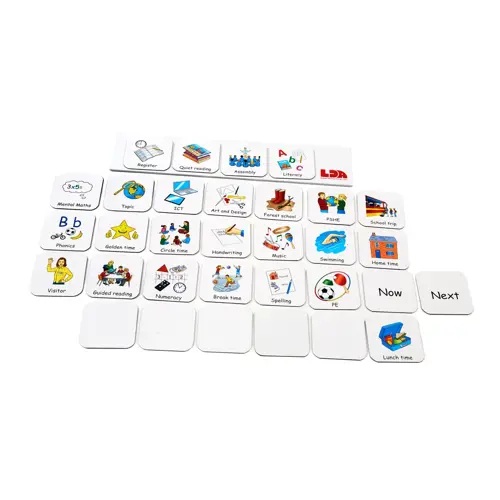
Knowing the day's schedule, routines and what is happening next can make a big difference to how secure a child feels in the classroom.
Visual timetables, choice cards and now-and-next boards can make routines clearer and transitions easier to manage. They can also reduce reliance on spoken instructions and help children become more independent.
The same principle can be applied to learning. Show as well as tell. Demonstrate an activity before asking pupils to complete it. Break longer instructions into manageable stages. Use pictures, objects and examples to reinforce important information.
These are simple changes, but their impact can reach far beyond pupils with identified additional needs.
Look at the environment through the child's eyes
Sometimes it isn't the lesson that's creating a barrier. It's everything happening around it. The hum of a busy classroom. Bright lighting. Chairs scraping across the floor. Crowded displays. Lots of movement. Nowhere quiet to work.
Most pupils will barely notice some of these things. For a child with sensory processing needs, they can make concentrating considerably harder.
Take time to look at the classroom from different perspectives. Does every wall need to be busy? Could the layout provide quieter places to work? Are there spaces pupils can use when they need time to regulate? Could seating be adapted for a child who finds a particular part of the room difficult?
Sensory resources can also provide valuable support when they are chosen around the needs of the individual child.
The resource itself isn't the starting point. The child's need is. Understand the barrier first. Then consider the environment, strategy or resource that could help reduce it.
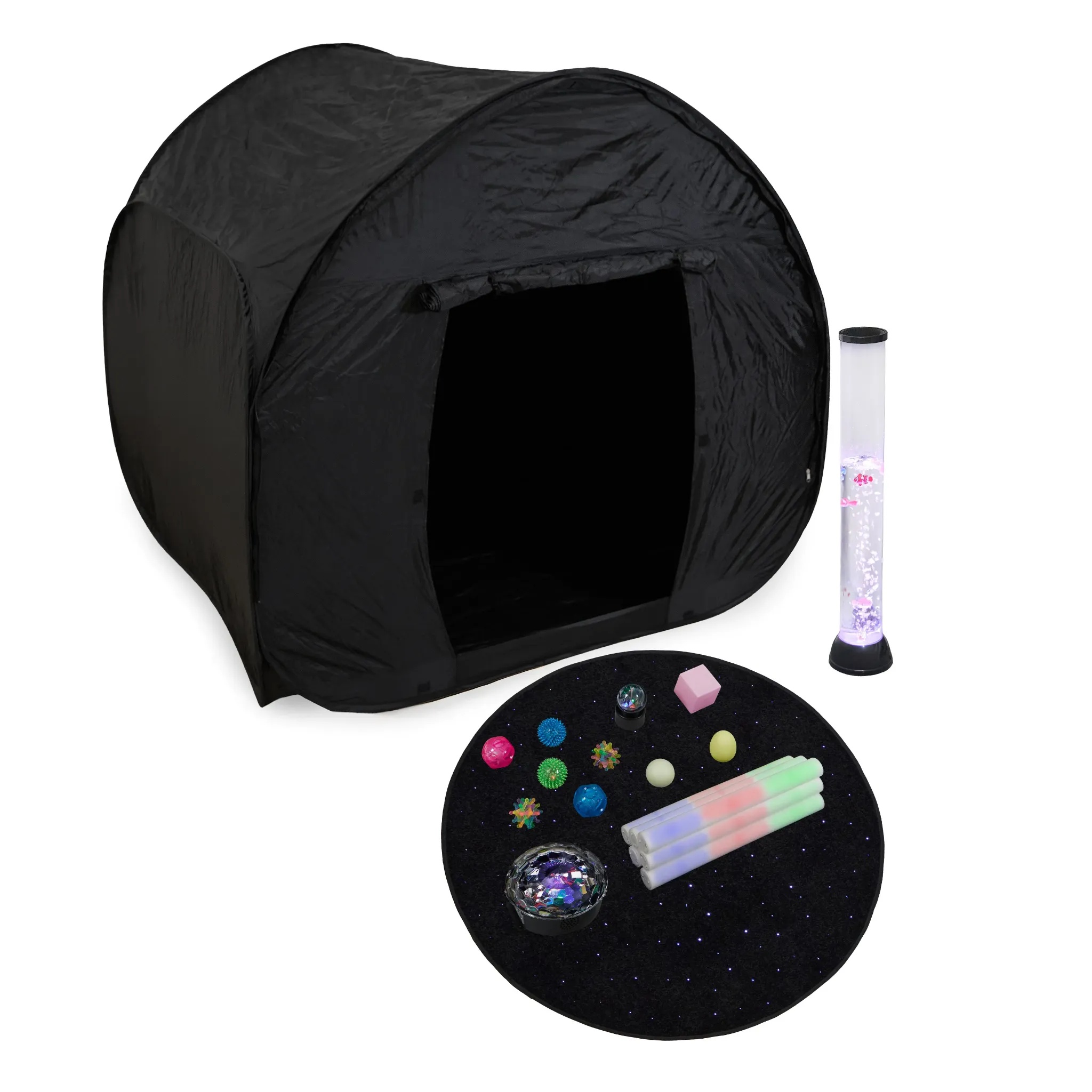
Create a sensory den in your classroom for emotional regulation
Using Technology to Support Learning
Technology can play an important role in making learning more accessible as children progress through school. Simple tools such as talking tins, audio recorders and word-processing software with accessibility features can support children who experience difficulties with writing, memory or processing.
Used thoughtfully, these tools can help reduce barriers while enabling pupils to demonstrate their knowledge and participate more independently. For example, recording and replaying a sentence before writing can reduce demands on working memory, allowing a child to concentrate more fully on translating their ideas into written language.
Make space for emotional wellbeing
Children learn best when they feel secure, understood and part of their community.
That matters in every school but internationally a pupil might be adjusting to a new country, leaving friends behind, joining school partway through the year or learning how to communicate within a new culture.
For some children, those experiences sit alongside additional social, emotional or communication needs. Small things can help. Visual emotion resources can give pupils a simple way to show how they are feeling. Predictable routines can create reassurance. Structured group activities can make social interaction easier. A calm space can give a child somewhere to regulate before returning to learning.
And representation matters too. Children should be able to recognise themselves, their cultures and their experiences in the books, resources and environments around them.

View our recommended products to support social, emotional and mental health
Inclusive for All
Inclusive approaches can have benefits that extend beyond pupils with identified additional learning needs. Visual supports, sensory resources, structured routines and accessible learning materials can help create clearer, more supportive learning environments in which a wider range of pupils can participate confidently.
Inclusive classrooms are built through thoughtful planning and choices, not quick fixes. Evidence-informed resources and approaches, when used consistently and alongside high-quality interactions, can help create an environment where all children can participate meaningfully in class.
From their earliest experiences of education through to their final years at school, every child brings changing needs. When adaptations are carefully planned, they can have a meaningful impact on participation, confidence and learning outcomes for all children.
Through LDA, Findel has worked alongside educators for more than 30 years to develop and source specialist resources that support children with additional learning needs.
Our resources support four key areas: Cognition & Learning, Communication & Interaction, Physical & Sensory Needs, and Social, Emotional & Mental Health.
That expertise forms part of the wider Findel offer, helping schools around the world create environments in which more children can participate confidently and make progress.
About Findel
Findel is a global supplier of educational resources, with a family of well-established brands whose heritage dates back to 1817 and includes some of the most recognised names in education. Our dedicated international sales team has considerable experience supporting customers in more than 130 countries, backed by an extensive network of distributors and a UK-based customer contact centre.
Our high-quality educational resources are developed for classroom use and span a wide range of curriculum areas and learning needs, including mathematics, English and literacy, sport, technology, science, early education and SEND support.
With more than 30,000 products available, our range gives schools choice, value and quality across a broad spectrum of educational needs. Our extensive offering means customers can source resources for multiple areas of school life through one supplier. We also develop thousands of our own products specifically for education, offering resources that cannot be found elsewhere.
Our international team understands the complexities of supplying schools around the world. Supported by experienced UK-based customer service advisers with specialist export knowledge, they can help with enquiries and manage orders from initial request through to delivery.